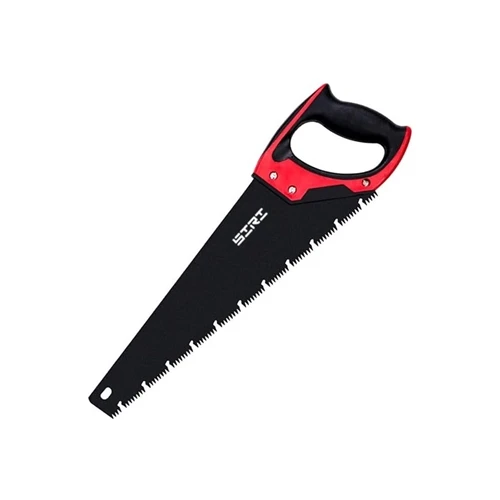
1. Clean sawdust & tree‑resin after every cut
Wood dust and sticky tree sap will stick between saw teeth. Accumulated resin creates heavy friction, making cutting slow and labor‑intensive.
‑ Use brush to sweep away chips.
‑ For heavy resin: apply a little non‑corrosive solvent and wipe blade clean.
‑ Keep the saw clean before storage.
2. Prevent rust: keep blade dry
Moisture from outdoor work, rain or high‑humidity warehouse causes rust spots.
‑ Wipe sweat, dew and water off blade immediately after use.
‑ Before long‑time storage, coat thin layer anti‑rust oil over metal surface.
‑ Store in ventilated, dry position, avoid damp basement or garden shed.
3. Correct cutting operation protects teeth
Many damaged saws come from misuse rather than poor material.
‑ Do not twist or bend saw blade during cutting. Lateral force leads to bent blade or broken teeth.
‑ Wood‑working hand saw is only for wood & branches. Do not cut nails, wire, stone or metal. Hard impurities will nick tooth edges permanently.
‑ Do not apply excessive downward pressure. Let sharp teeth do the cutting work. Heavy forcing speeds up blunting.
4. Safe storage: protect saw‑teeth from impact
Saw teeth are hard but brittle. Knocking against walls, tools or hard floor will chip teeth.
‑ Hang saw on wall bracket; or equip blade protective sheath.
‑ Do not throw saw into tool‑box mixed with hammers, wrenches and other hard tools.
5. Sharpen or replace when performance drops
‑ When cutting gets sluggish and requires much pushing force, it is time for sharpening with special saw file.
‑ If teeth are broken, heavily nicked or blade is permanently bent, sharpening cannot recover performance - replace the whole saw.
Quick checklist for end‑users
✅ Clear sawdust & resin after work
✅ Wipe away water & moisture
✅ Light anti‑rust oil for long storage
✅ No bending, no cutting metal / stone
✅ Keep teeth protected against impact